

 English
 中文简体
 русский
 Español
 عربى


Industry News
40Cr Alloy Steel Pellet Roller Shell: Hardness, Wear Life & Buying Guide
A pellet plant running two shifts through a humid season can wear out a full set of roller shells in a single quarter, and the replacement quotes that arrive afterwards often differ by a factor of three for parts that look identical in photographs. The variable behind that spread is the steel, and more precisely the heat treatment behind it.
This guide takes a close look at the 40Cr alloy steel pellet roller shell, the mid-grade workhorse of the spare parts market for feed and general pelletizing. It covers what the grade actually contains, how it compares with 20CrMnTi, GCr15 and 60Si2Mn alternatives, which numbers a buyer should demand, and where specifying it is a mistake.
Content
- 1 What 40Cr Alloy Steel Is and Why It Suits Roller Shells
- 2 40Cr vs 20CrMnTi, GCr15 and 60Si2Mn: Picking the Right Shell Grade
- 3 The Numbers That Decide How Long a 40Cr Shell Lasts
- 4 Where 40Cr Shells Perform Best and Where They Fail Early
- 5 How a 40Cr Roller Shell Is Manufactured, Step by Step
- 6 Match Shell, Die and Shaft as One Wearing System
- 7 40Cr Roller Shell FAQ
What 40Cr Alloy Steel Is and Why It Suits Roller Shells
40Cr is a chromium alloy structural steel defined in the Chinese standard GB/T 3077, containing 0.37 to 0.44 percent carbon, 0.50 to 0.80 percent manganese and 0.80 to 1.10 percent chromium. For a roller shell that balance is deliberate: carbon sets the hardness the surface can reach, while chromium deepens hardenability so thick toothed sections respond evenly to induction hardening.
Buyers in other markets meet the same steel under different names: AISI/SAE 5140, DIN 41Cr4 (1.7035) and JIS SCr440. Asking a supplier for a mill certificate that references GB/T 3077, then cross-checking the equivalent grade, is a five-minute exercise that filters out most low-ball offers.
The finishing route on a proper shell follows the same logic. The blank is forged, then quenched and tempered so the core lands around HB 217 to 255; the tooth profile is machined; and the working surface is induction hardened, typically to HRC 52 to 58. The result is a tough, crack-resistant body carrying a hard skin exactly where material bites.
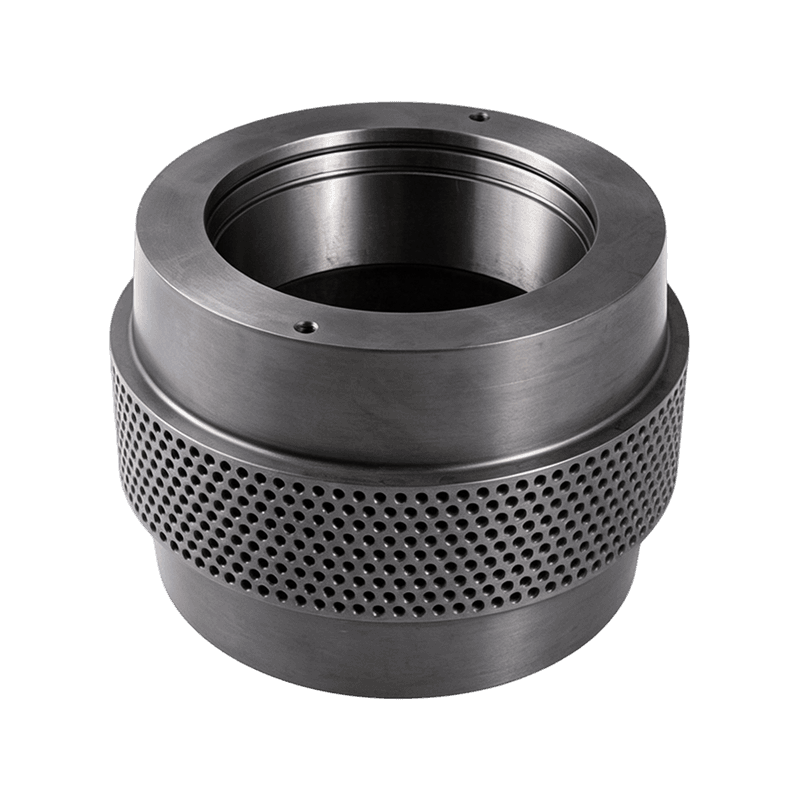
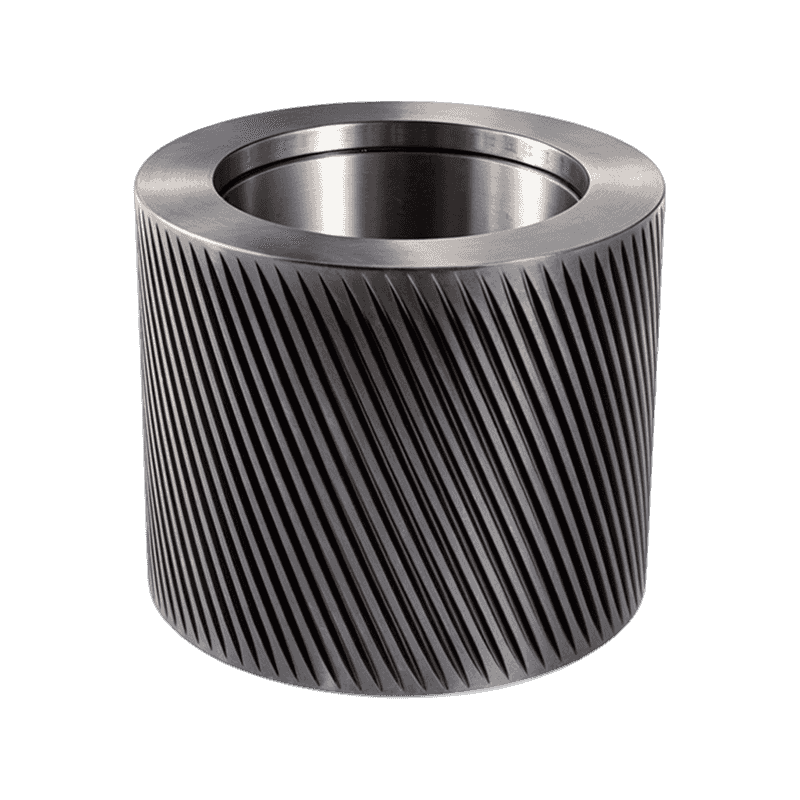
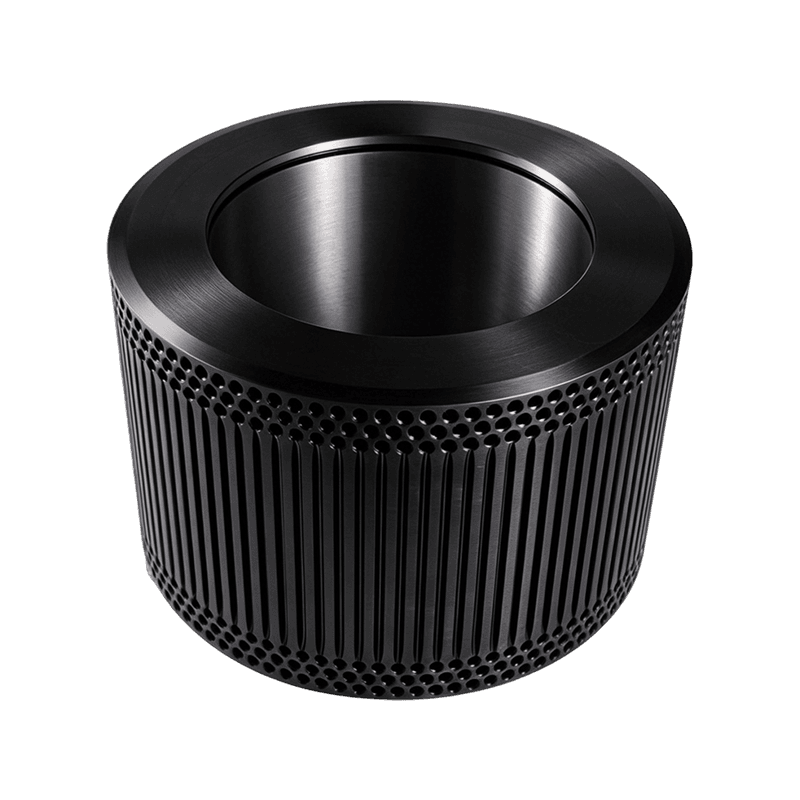
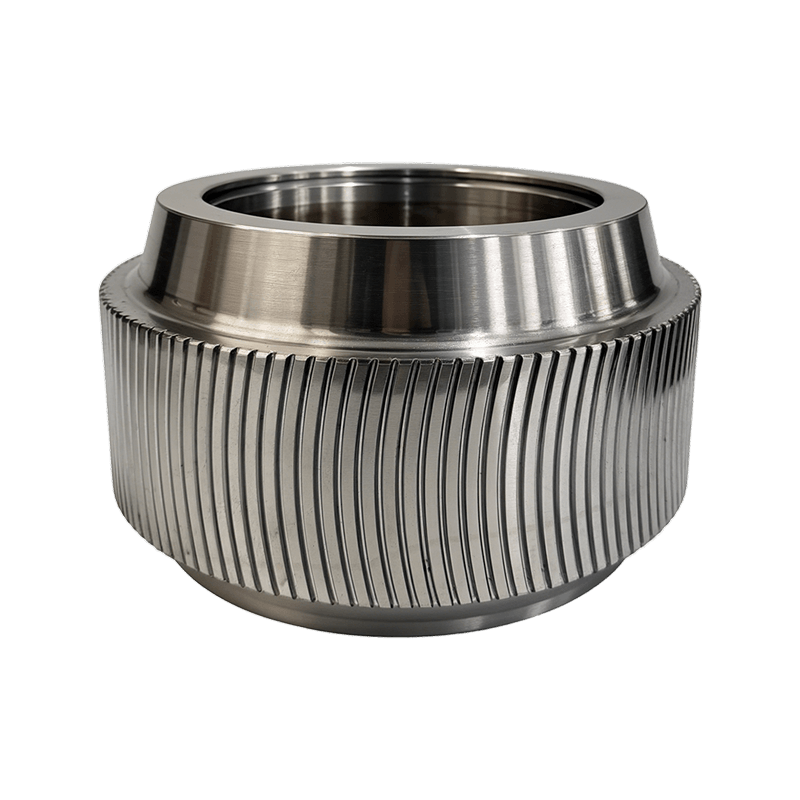
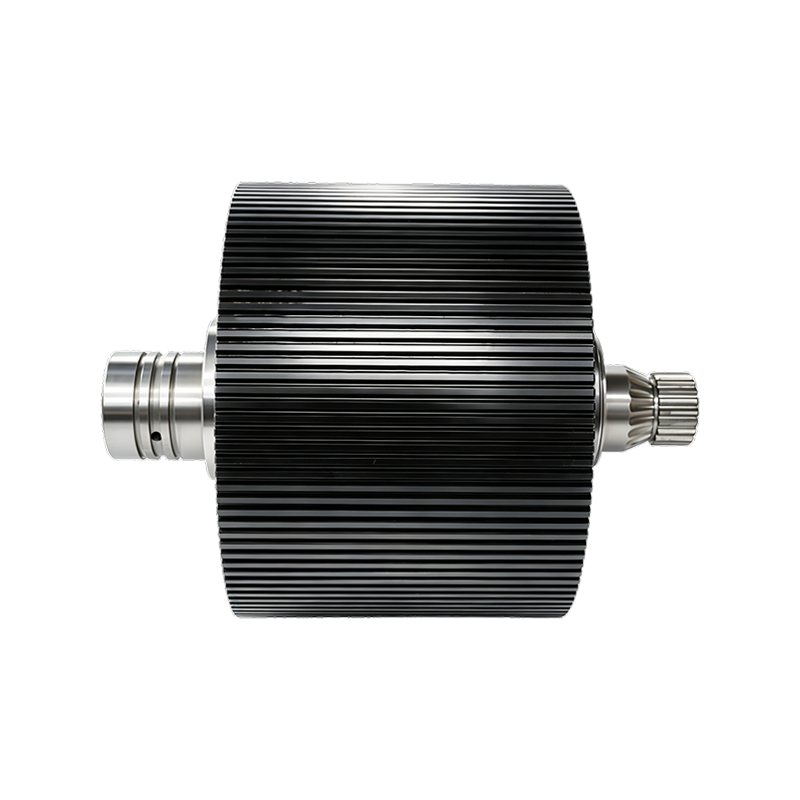
A 40Cr alloy steel pellet roller shell is the cylindrical, tooth-patterned wear part that presses material against the ring die inside a pellet mill, made from GB/T 3077 40Cr steel with a quenched-and-tempered core and an induction-hardened working surface of roughly HRC 52 to 58.
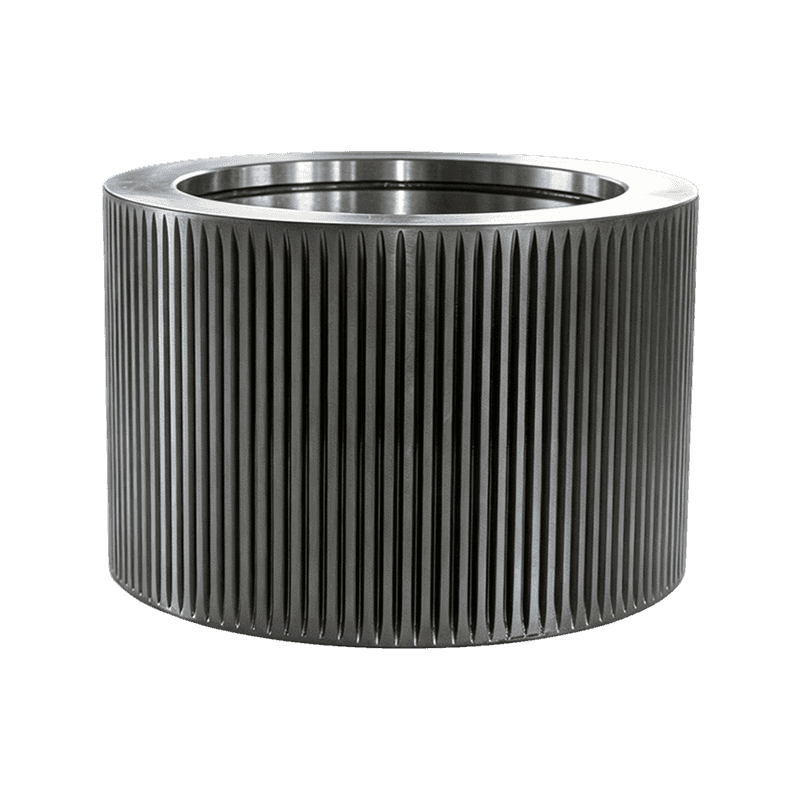 40Cr Alloy Steel Pellet Roller ShellA quenched-and-tempered 40Cr roller shell with an induction-hardened toothed surface, offered in multiple tooth patterns. It suits moderate-duty pelletizing where even hardness and cost-effective wear performance matter more than premium steel grades.View Product →
40Cr vs 20CrMnTi, GCr15 and 60Si2Mn: Picking the Right Shell Grade
40Cr is the value pick for moderate duty, and the premium grades earn their price only when abrasion, impact or continuous running turns severe. The real difference between the four common shell materials is the heat-treatment strategy each steel allows, not the mill that rolled it.
A 40Cr shell carries an induction-hardened skin over a forgiving core. A 20CrMnTi shell is carburized: carbon is diffused into the surface before quenching, giving a 58 to 62 HRC case over a shock-absorbing core that suits abrasive or contaminated mixes. GCr15 or 100Cr6 bearing steel is through-hardened to 60 to 64 HRC for maximum wear resistance, at the cost of brittleness when rolls run misaligned. 60Si2Mn spring steel trades top-end hardness for toughness, resisting the crack growth that destroys shells in high-load presses.
If your recipe includes sand, recycled material or fibrous biomass, it pays to read how a carburized 20CrMnTi roller shell builds its hard case before locking in a material choice.
| Material | Typical surface hardness | Heat-treatment route | Best suited to | Main limitation |
| 40Cr | HRC 52 to 58 | Quench and temper, then induction hardening | Grain-based feed and general pelletizing | Surface hardness fades under severe abrasion |
| 20CrMnTi | HRC 58 to 62 | Carburizing, then quench and temper | Abrasive or contaminated mixes, long campaigns | Higher material and processing cost |
| GCr15 / 100Cr6 | HRC 60 to 64 | Through hardening and tempering | High-abrasion biomass and hardwood pellets | Sensitive to impact and misalignment |
| 60Si2Mn | HRC 54 to 58 | Quench and medium-temperature temper | High-load presses needing crack resistance | Lower maximum hardness than bearing steel |
The Numbers That Decide How Long a 40Cr Shell Lasts
Surface hardness opens the conversation, but roll-to-die clearance and tooth geometry decide how many hours a 40Cr shell actually delivers. A shell that scores perfectly on a hardness report still underperforms if it runs half a millimetre off the die face, because material slips instead of compressing and the die grinds a flat into the teeth.
Between shell and die, most feed formulations run best with roughly 0.10 to 0.30 mm of clearance. Tighter than that, metallic contact drives heat into the case; looser, and output drops while fines build up. Then watch the teeth instead of the calendar: once the profile rounds over by about a millimetre, grip falls, throughput sags and the die starts wearing faster than the shell you just paid for.
Typical working-surface hardness by shell material, HRC
Where 40Cr Shells Perform Best and Where They Fail Early
Choose 40Cr for grain-dominant feed and planned maintenance; move up to a carburized or bearing-steel shell when abrasion or continuous duty dominates. Plant experience keeps repeating the same divide: 40Cr is often the most economical option for softer ingredients, but it cannot hold a hard working surface under severe abrasion.
Specify 40Cr when
- Poultry, pig or cattle feed made from grain-dominant recipes
- Replacements are planned and shells are swapped before extreme wear
- Cost per replacement cycle matters more than the longest possible interval
Pay more for a premium grade when
- Biomass, hardwood or high-silica materials drive abrasive wear
- Lines run continuously and an unplanned stop is expensive
- Shells and dies are replaced as a matched high-output set
A rule of thumb used by procurement teams: if a set of shells costs less than one hour of unplanned downtime, the material grade is not where you should be saving money.
How a 40Cr Roller Shell Is Manufactured, Step by Step
Most quality problems with 40Cr shells trace back to skipped or shortened heat-treatment steps, so audit the process rather than trusting the certificate. A properly made shell passes through six stages:
- Forging the billet to refine the grain structure and close internal porosity
- Rough machining to near-net dimensions before heat treatment
- Quenching and tempering to set a core hardness around HB 217 to 255
- Finish machining of the bore, locating surfaces and tooth profile
- Induction hardening of the working surface to HRC 52 to 58
- Final grinding, balancing and dimensional inspection
The eccentric shaft that drives the roller follows the same logic in reverse. It is commonly offered in the same 40Cr grade so its strength and wear behaviour stay matched to the shell it supports, and ordering both from one manufacturer keeps the fits consistent.
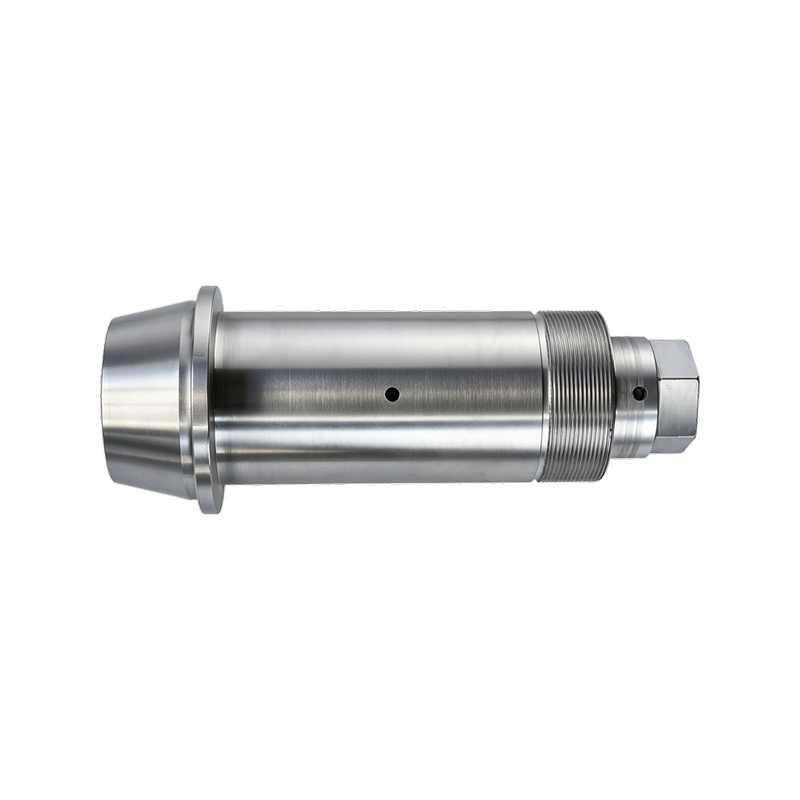 40Cr Eccentric Shaft for Pellet MillsA CNC-machined 40Cr eccentric shaft with a scale-free quenched finish, available in standard industrial sizes. Sourcing it in the same grade as the roller shell keeps strength, wear behavior and assembly fits consistently matched.View Product →
Match Shell, Die and Shaft as One Wearing System
A roller shell never wears alone, so experienced buyers specify shell, ring die and eccentric shaft as one matched package. Run a new shell against an old die and the hardened teeth bed into a worn profile, contact pressure peaks at a few points, and both parts wear faster than either would alone.
For high-output lines the pairing can be bought as one item: a ring die and roller shell set manufactured and inspected together removes the guesswork of matching hardness and geometry across two vendors.
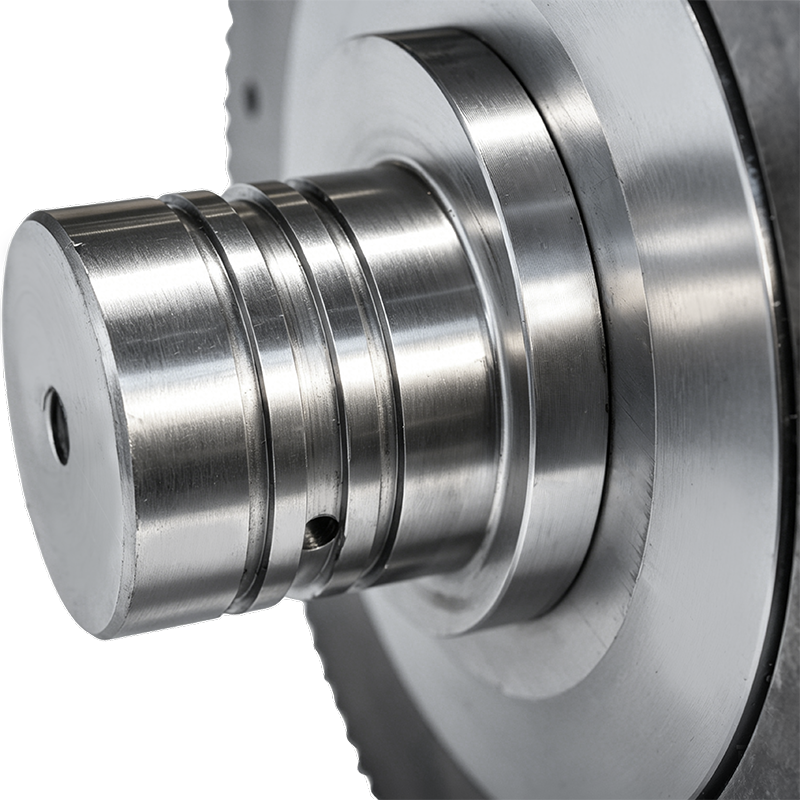 Ring Die and Roller Shell AssemblyA matched ring die and roller shell assembly with alloy steel shells hardened to HRC 58-62, heavy-duty tapered bearings and multi-layer sealing. Buying the pairing as one inspected unit removes the guesswork of matching hardness and geometry across vendors.View Product →
Because these parts interact, many buyers prefer to source shells, dies and shafts from a single pellet mill spare parts supplier. Anhui Jindingsheng Machinery Co., Ltd. works exactly in this position: the company focuses on roller shells, ring dies and matching pellet mill components, and describes itself as a one-stop service centre controlling the chain from raw material selection through forging, precision machining and heat treatment.
40Cr Roller Shell FAQ
How long does a 40Cr roller shell last?
It depends on formulation and running hours more than on the steel itself. Feed plants running grain-based recipes commonly report 800 to 1,500 operating hours per set, while abrasive biomass can cut that window in half. Track tooth profile and throughput, not the calendar.
Is 40Cr the same steel as AISI 5140?
They are close equivalents with the same carbon-chromium balance, though tolerance ranges for manganese and silicon differ slightly between GB/T 3077 and the SAE standard. Treat 5140 as a cross-reference, and still ask a Chinese supplier for the GB/T 3077 certificate.
Can a worn 40Cr shell be re-machined?
Rarely. The induction-hardened case is typically only a couple of millimetres deep, so re-cutting the tooth profile strips the hardened layer and leaves soft steel running against the die. Replacement is the standard practice.
What hardness should a purchase order state?
Specify HRC 52 to 58 at the surface, require core hardness and case depth in the report, and insist that readings are taken at the tooth root. A one-line hardness note on an invoice is not a heat-treatment record.
The 40Cr alloy steel pellet roller shell holds its position for honest reasons: predictable to manufacture, easy to verify, and affordable enough to remain the default wear part on most feed lines. Match it to your formulation, check the heat-treatment paperwork, and replace it as part of a system, and it returns some of the lowest cost-per-tonne figures in the press room.

Get In Touch
Follow us
Quick Links
Contact Us
Email : ysf@jindingsheng.com.cn
Address : No. 19, Qiucun Town Industrial Concentration Zone, Guangde City, Xuancheng City, Anhui Province
