

 English
  中文简体
中文简体  русский
  Español
  عربى
عربى 

Industry News
Alloy Steel 20CrMnTi Pellet Roller Shell: Wear Resistance, Hardness & Buying Guide
Content
- 1 Why 20CrMnTi Roller Shells Are Worth the Specification
- 2 What 20CrMnTi Alloy Steel Is
- 3 Why the Case-and-Core Structure Matters in a Pellet Press
- 4 20CrMnTi vs Other Roller Shell Materials
- 5 How a 20CrMnTi Roller Shell Is Manufactured
- 6 What to Check When Buying 20CrMnTi Roller Shells
- 7 Where 20CrMnTi Roller Shells Perform Best
- 8 Sourcing 20CrMnTi Roller Shells from a Specialist
Why 20CrMnTi Roller Shells Are Worth the Specification
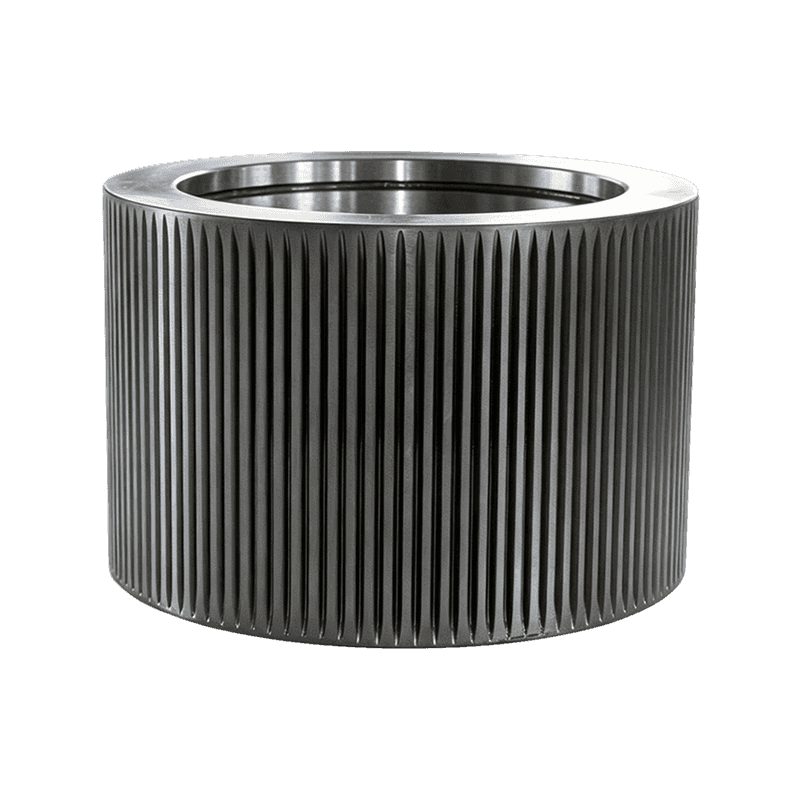
A pellet mill roller shell machined from 20CrMnTi alloy steel is specified for one clear reason: it delivers a carburized surface hardness of 58-62 HRC while keeping a tough, shock-absorbing core. This combination is not a marketing feature; it is the direct answer to the two ways roller shells fail in production — abrasive wear on the rolling face and cracking under impact. When a roller shell presses material against the ring die, the contact area carries high compressive stress, and the shell body is repeatedly loaded through the bearing and eccentric shaft. Feed containing mineral abrasives, biomass with embedded grit, or fertilizer blends accelerates surface wear, while hard particles and uneven material flow introduce impact loads. A shell that is hard all the way through resists wear but risks fracture. A shell that is only tough wears quickly. Our 20CrMnTi alloy steel pellet roller shell is designed to avoid both failure modes.
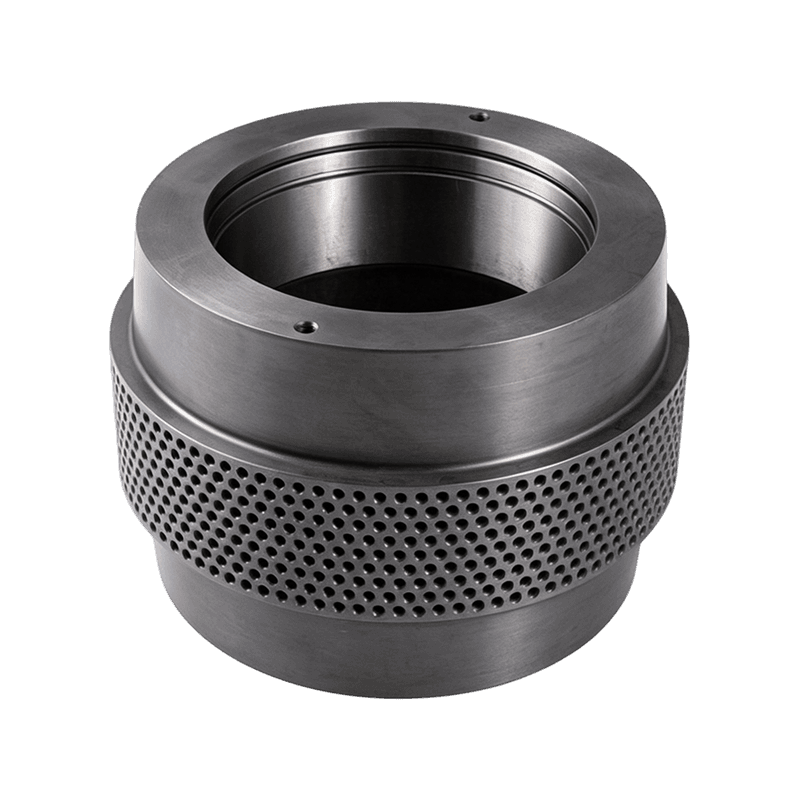 Custom Alloy Steel 20CrMnTi Pellet Roller Shell Supplier, CompanyAnhui Jindingsheng Machinery Co., Ltd is China Custom Alloy Steel 20CrMnTi Pellet Roller Shell Supplier and Company. Product Overview A h...View Product →
What 20CrMnTi Alloy Steel Is
20CrMnTi is a low-carbon alloy structural steel defined in the Chinese standard GB/T 3077 and widely used for carburized components. Its nominal composition includes 0.17-0.23% carbon, 1.00-1.30% chromium, 0.80-1.10% manganese, and 0.04-0.10% titanium. The low base carbon content keeps the core tough, while chromium and manganese improve hardenability, and titanium refines the grain structure during heat treatment.
The Role of Titanium in the Alloy
Titanium is what distinguishes 20CrMnTi from a plain chromium-manganese steel. It forms fine, stable carbides and nitrides that pin grain boundaries during heating, preventing austenite grains from coarsening during the long soak needed for carburizing. A fine grain structure in the finished roller shell means better fatigue resistance — an important property for a part that experiences millions of load cycles over its service life.
How Carburizing Creates the Dual Structure
Carburizing introduces additional carbon into the surface layer of the machined roller shell. After quenching and tempering, this carbon-rich case transforms into a hard, wear-resistant martensitic layer, while the low-carbon core remains more ductile. For a pellet roller shell, an effective case depth of roughly 0.8 to 1.5 mm is typical, with a surface hardness of 58-62 HRC and a core hardness in the range of 30-45 HRC. That structure allows the roller shell to slide against abrasive material for thousands of operating hours without scoring, and still survive the shock of a stray hard particle.
Why the Case-and-Core Structure Matters in a Pellet Press
In a ring die pellet mill, the roller shell is the component that pushes material through the die holes. The pressure in the pressing zone is high enough to deform material plastically, and the roller shell surface is constantly exposed to particles that act like a fine abrasive. At the same time, the shell receives alternating loads through the pressure roller assembly as it rolls over the die. A carburized 20CrMnTi shell offers a practical balance: a hard case that resists abrasive wear and a core that bends slightly under heavy load instead of cracking. The practical result is a predictable service life, fewer unscheduled stops, and lower cost per ton of pellets. Operators who switch from softer, through-hardened materials often report that the shell surface holds its profile longer, which also helps maintain consistent pellet quality.
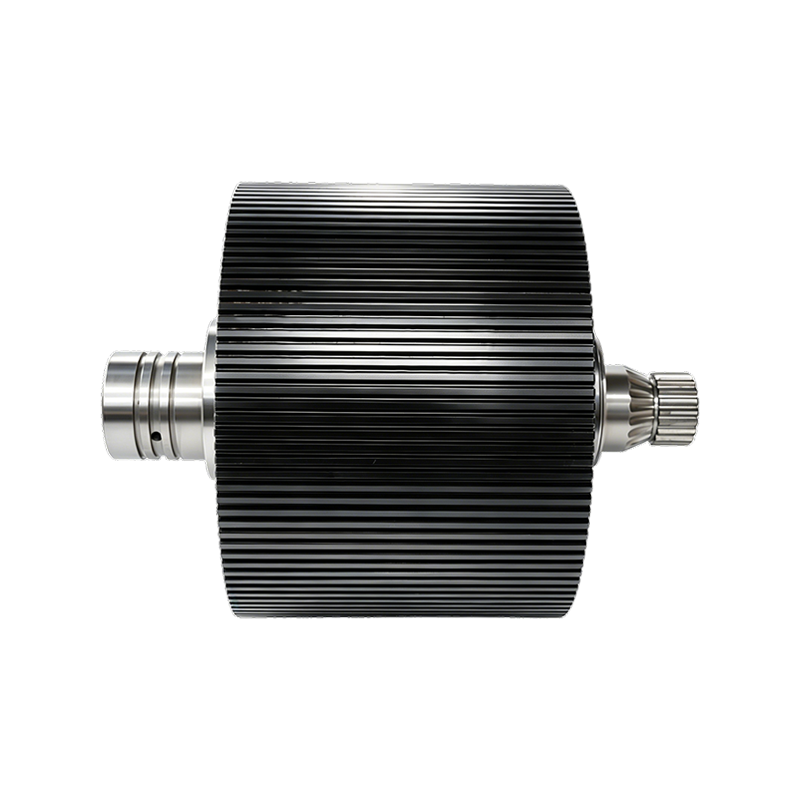
If you are evaluating how the roller shell interacts with the rest of the drive side, our article on pressure roller assembly construction and wear patterns explains the failure sequence and what to inspect during maintenance.
20CrMnTi vs Other Roller Shell Materials
Roller shells are commonly offered in several steel grades, and each grade represents a different trade-off between hardness, toughness, and cost. The table below summarizes the typical values for the materials most often seen in pellet mill spare parts.
| Material | Type | Typical surface hardness | Core toughness | Best suited for |
|---|---|---|---|---|
| 20CrMnTi | Carburizing alloy steel | 58-62 HRC (case) | High | Abrasive feed and moderate shock loads |
| 40Cr | Quenched and tempered alloy steel | 28-40 HRC (through) | Medium-high | General duty with moderate wear |
| GCr15 / 100Cr6 | Bearing steel | 60-63 HRC (through) | Lower | Hard materials at low impact |
| 60Si2Mn | Spring steel | 45-52 HRC (through) | High | Impact-heavy or elastic pressing conditions |
40Cr is often the most economical option for softer ingredients, but it cannot hold a hard working surface under severe abrasion. GCr15 provides high hardness but has lower toughness, so it is more likely to chip when the pellet mill is fed unevenly or when foreign objects enter the pressing chamber. 60Si2Mn absorbs impact well but wears faster in abrasive service. 20CrMnTi sits between these extremes: it offers the hardness of a bearing steel at the working surface and the toughness of a spring steel in the body, which is why it has become a preferred material for demanding pelletizing duties. For operators with lighter workloads, our 40Cr alloy steel roller shell remains a cost-effective alternative.
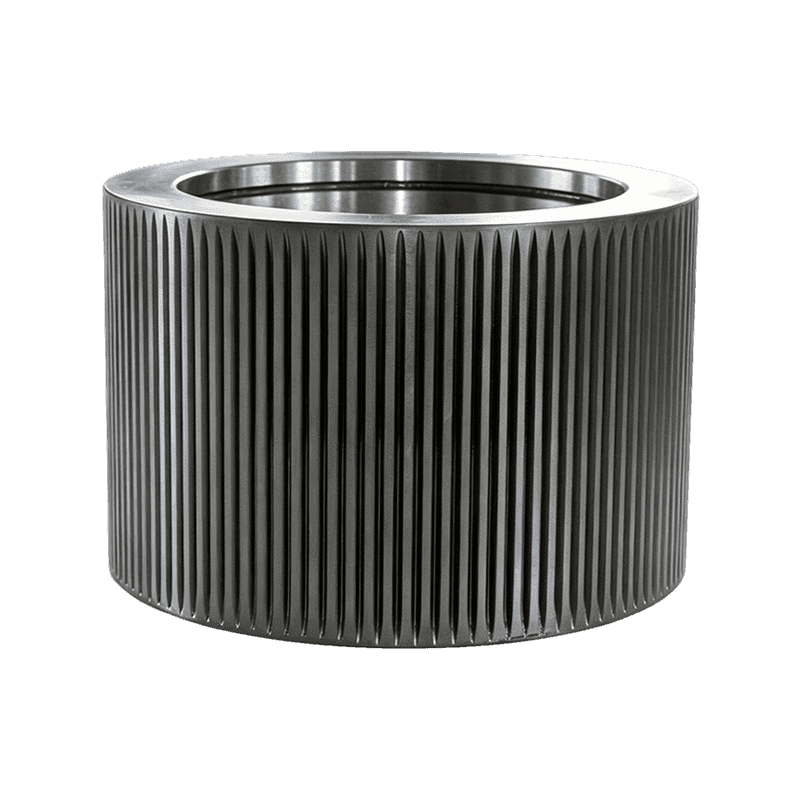 Custom 40Cr Alloy Steel Pellet Roller Shell Supplier, CompanyAnhui Jindingsheng Machinery Co., Ltd is China Custom 40Cr Alloy Steel Pellet Roller Shell Supplier and Company. Product Overview A wide...View Product →
How a 20CrMnTi Roller Shell Is Manufactured
The material grade only performs as expected if the manufacturing process is controlled from forging to final grinding. A 20CrMnTi roller shell typically goes through six stages: forging, rough machining, carburizing, quenching and tempering, finish grinding, and final inspection.
Forging starts with a billet heated to forging temperature and shaped close to the final geometry. Proper forging produces a grain flow that follows the contour of the shell, which improves the strength of the part. After rough machining, the shell is carburized in a furnace with controlled carbon potential, usually in the 900-930°C range. This step determines the case depth. The subsequent quench and temper cycle creates the final hardness values. Finish grinding is where the bore, outer diameter, and rolling face are brought to print. Because the roller shell is a rotating component pressed against the die, any error in concentricity between the bore and the outside diameter will create uneven pressure distribution, faster bearing wear, and premature shell failure.
What to Check When Buying 20CrMnTi Roller Shells
Not all 20CrMnTi roller shells are equal. The material designation alone does not guarantee performance; heat treatment and machining quality determine whether a shell lasts 500 hours or 2,000 hours. When evaluating a supplier, check the following points.
- Hardness and case depth verification: Ask for the tested surface hardness (58-62 HRC) and effective case depth. If a supplier cannot provide these values, the shell may not have been carburized correctly — or at all.
- Concentricity and geometry: The runout between the bore and the working surface should be within a tight tolerance, measured in tenths of a millimeter. Excessive runout causes uneven wear and can overload the roller bearings.
- Surface finish of the rolling face: A consistent finish improves material grip and reduces die wear. Both overly smooth and overly rough surfaces create problems in the pressing zone.
- Wall thickness uniformity: Variation in wall thickness signals poor machining control and leads to an unbalanced rotating assembly.
- Material traceability: A reputable manufacturer can provide mill certificates and heat treatment records confirming the grade and process.
Buying purely on price often leads to the most expensive outcome: a shell that fails early, damages the ring die, or takes the bearing with it. It is also worth inspecting the complete assembly during maintenance; you can follow our industry news on pellet mill parts and maintenance for guidance on replacement intervals and inspection routines.
Where 20CrMnTi Roller Shells Perform Best
20CrMnTi roller shells are used in feed mills, biomass pellet plants, and organic fertilizer lines. In feed production, ingredients such as corn, soybean meal, minerals, and trace additives create an abrasive environment. Biomass materials bring their own challenges, including variable moisture and occasional sand or grit picked up during handling and storage. Fertilizer granulation lines often process materials that are both abrasive and prone to sticking.
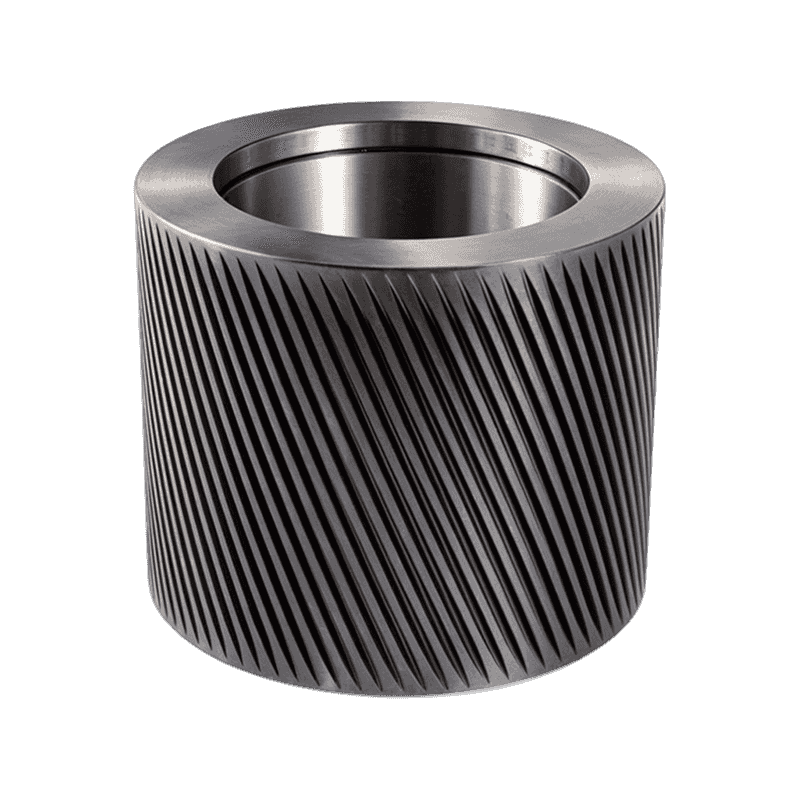
Feed mill operators running abrasive formulas typically select the standard flat-faced 20CrMnTi shell and rely on its carburized case for long life. When materials slide instead of being gripped by the die, a tooth profile is more effective. For these cases, our curved-tooth roller shell for pellet mills improves material bite while still using a wear-resistant alloy, giving the best of both gripping and durability.
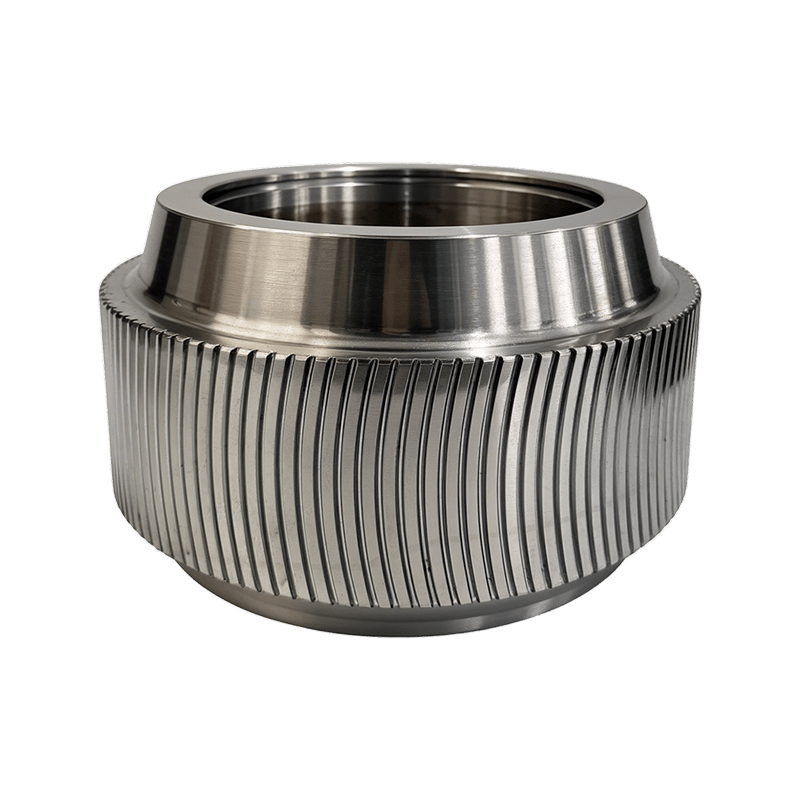 Custom Curved Tooth Roller Shell for Pellet Mill Supplier, CompanyAnhui Jindingsheng Machinery Co., Ltd is China Custom Curved Tooth Roller Shell for Pellet Mill Supplier and Company. Product Overview Th...View Product →
Sourcing 20CrMnTi Roller Shells from a Specialist
Sourcing from a manufacturer that controls the entire process reduces the variability that shortens roller shell life. Anhui Jindingsheng Machinery Co., Ltd. is a professional pellet mill and granulator parts manufacturer located in the Guangde Economic Development Zone in Anhui Province, China. The company focuses on ring dies, roller shells, pressure roller assemblies, eccentric shafts, and internal components, and positions itself as a one-stop service center for granulator and pellet mill spare parts. With a 14,509-square-meter facility and export experience covering the United States, Japan, South Korea, Vietnam, France, Bangladesh, Russia, India, the Philippines, and several European countries, its production system already meets the expectations of international buyers.
From raw material selection through forging, precision machining, and heat treatment, the manufacturing process is kept under in-house control. That is the practical meaning of a consistent 20CrMnTi roller shell: the same material, the same heat treatment cycle, and the same machining tolerances in every batch. For a complete view of available configurations, browse the pellet mill spare parts product range.
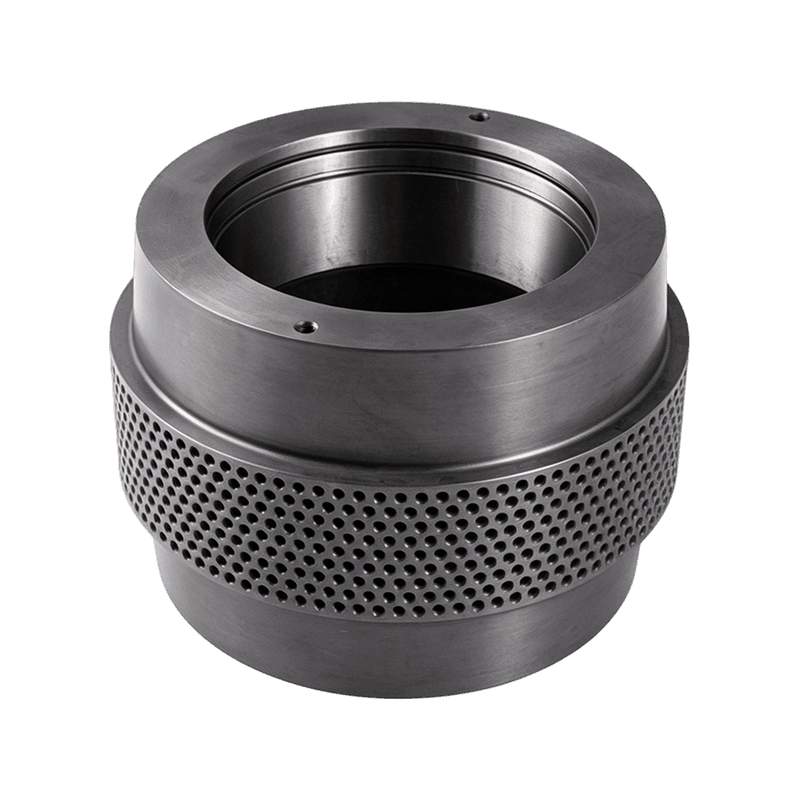


Get In Touch
Follow us
Quick Links
Contact Us
Email : ysf@jindingsheng.com.cn
Address : No. 19, Qiucun Town Industrial Concentration Zone, Guangde City, Xuancheng City, Anhui Province
