

 English
 中文简体
 русский
 Español
 عربى


Industry News
Pellet Mill Replacement Parts: How to Match Roller Shells, Dies, and Shafts
Most pellet plants discover worn die and roller shells the hard way: throughput per kilowatt-hour drops, the press begins to chatter, and pellets come out cracked at the edges. The root cause is often not the machine; it is a replacement part selected with the right part number but the wrong metallurgy or clearance.
Choosing pellet mill replacement parts is a maintenance decision as much as a purchasing step. It decides how long a ring die lasts, how much energy the press consumes, and whether a planned stop takes twenty minutes or a full shift.
Content
- 1 The Ring Die and Roller Shell Are One Wear Pair, Not Two Part Numbers
- 2 Match Roller Shell Steel to the Abrasive Load of Your Feed
- 3 Roller Shell Only or Complete Pressure Roller Assembly?
- 4 Eccentric Shafts and Internal Components Carry the Wear Chain Forward
- 5 Schedule Replacement Work on Gap Measurements, Not on a Calendar
- 6 Sourcing Pellet Mill Replacement Parts Without Losing Metallurgical Control
- 7 Pellet Mill Replacement Parts: Common Sourcing Questions from Maintenance Teams
- 7.1 How often should roller shells be replaced in a feed pellet mill?
- 7.2 Should I replace the complete pressure roller assembly or only the roller shell?
- 7.3 Why does a new roller shell sometimes fail before the old die is worn out?
- 7.4 What information should I send before ordering replacement parts?
The Ring Die and Roller Shell Are One Wear Pair, Not Two Part Numbers
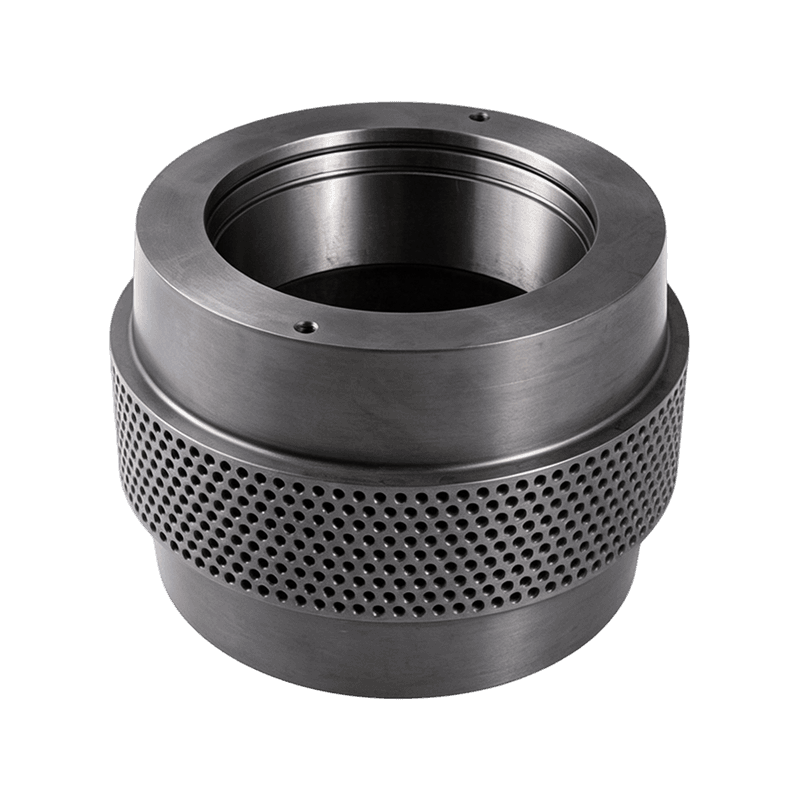
Ring dies and roller shells should be treated as a matched pair because wear on one component changes the contact geometry of the other. Running new shells against an old die concentrates the load on the high points of the die face and can chip the leading edges of the holes. Running a new die with worn shells leaves a polished surface that fails to bite, causing slip and excessive fines.
Practical maintenance teams track the two components together and set the radial gap between 0.1 mm and 0.4 mm, moving to the upper end for fibrous wood pellets. When that gap cannot be maintained with a reasonable number of turns on the adjustment screw, the next question is not whether to order parts but how the shell matches the die bore, keyway, pin centers, and press model. The die compression ratio also affects how aggressively the rollers must bite, so a change in feed formulation should trigger a review of the roller shell profile at the same time.
Replacement-part fit is not only bolt alignment. It means matching hardness, working gap, and material spec to the same operating window the original component was designed for.
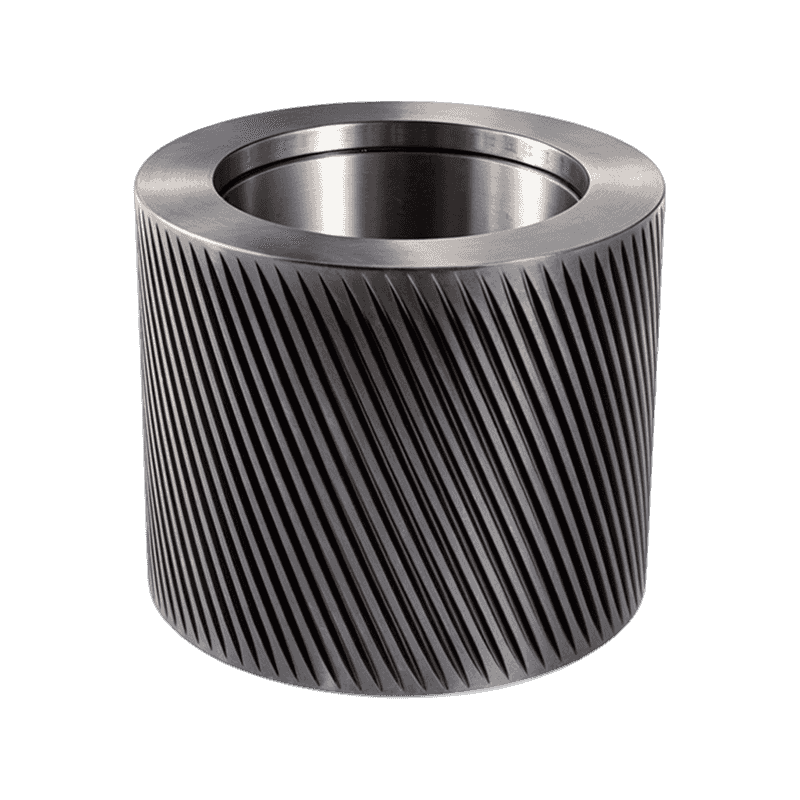
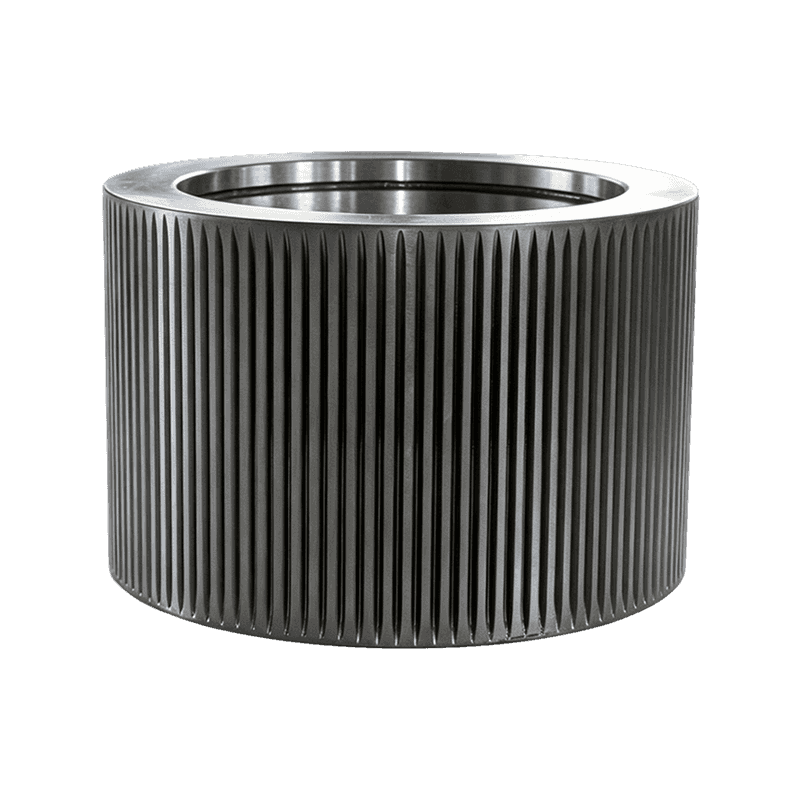
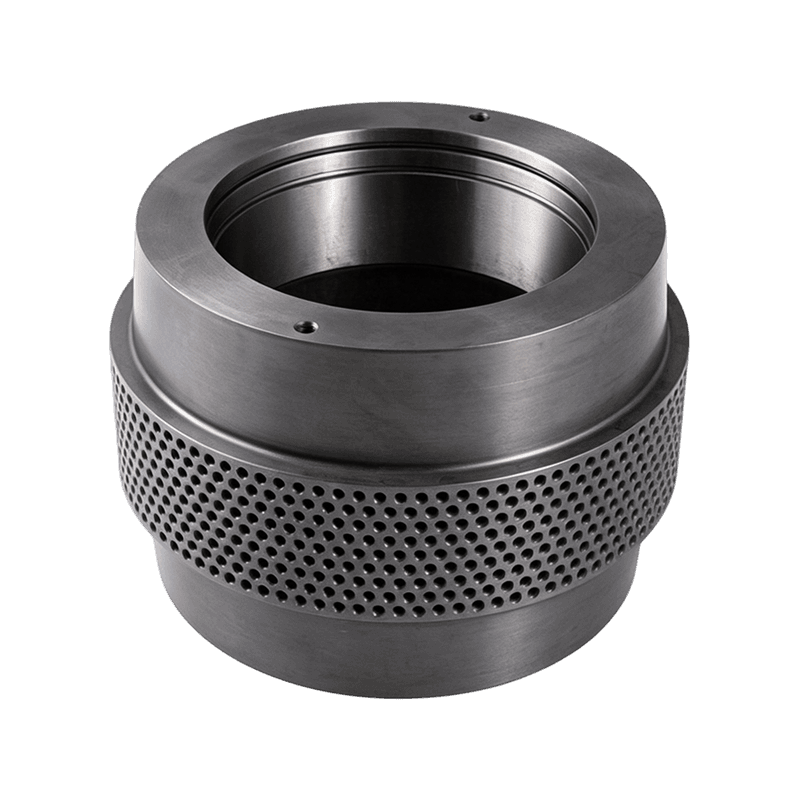 20CrMnTi Alloy Steel Pellet Roller Shell for Abrasive FeedThis case-hardened 20CrMnTi roller shell is recommended for feeds with sand contamination, as field comparisons show it outlasts plain carbon shells by 30 to 45 percent in abrasive conditions.View Product →
Match Roller Shell Steel to the Abrasive Load of Your Feed
The abrasive load in the feed, not the press brand, should be the starting point when selecting a roller shell. Silica, moisture, and fibre content determine how quickly a shell loses diameter. On mash feeds with noticeable sand contamination, case-hardened 20CrMnTi shells consistently outlast plain carbon shells by 30 to 45 percent in field comparisons. On low-abrasion grain feeds, a hard bearing steel such as GCr15 or 100Cr6 can deliver the longest total life because it maintains a smooth running surface under compression.
At Anhui Jindingsheng Machinery Co., Ltd., the product line is arranged around the full wear chain: eccentric shafts, internal components, roller shells, and pressure roller assemblies. The material choice is treated as a specification, not a catalogue default.
Relative wear-life comparison under abrasive feed conditions. Higher values indicate a longer service interval before the roller shell reaches its wear limit.
| Material | Hardness profile | Best suited for | Wear characteristic |
| 20CrMnTi | Case hardened, tough core | Abrasive mash feeds, wood blends | Slow uniform wear, good impact resistance |
| GCr15 / 100Cr6 | High through hardness | Low-abrasion grain and oilseed feeds | Long wear life, lower tolerance to tramp metal |
| 60Si2Mn | Spring steel, elastic | Heavy shock loads, high-tonnage presses | Resists cracking under sudden load changes |
| 40Cr | Alloy structural steel | General purpose maintenance roles | Balanced wear and cost for early-stage plants |
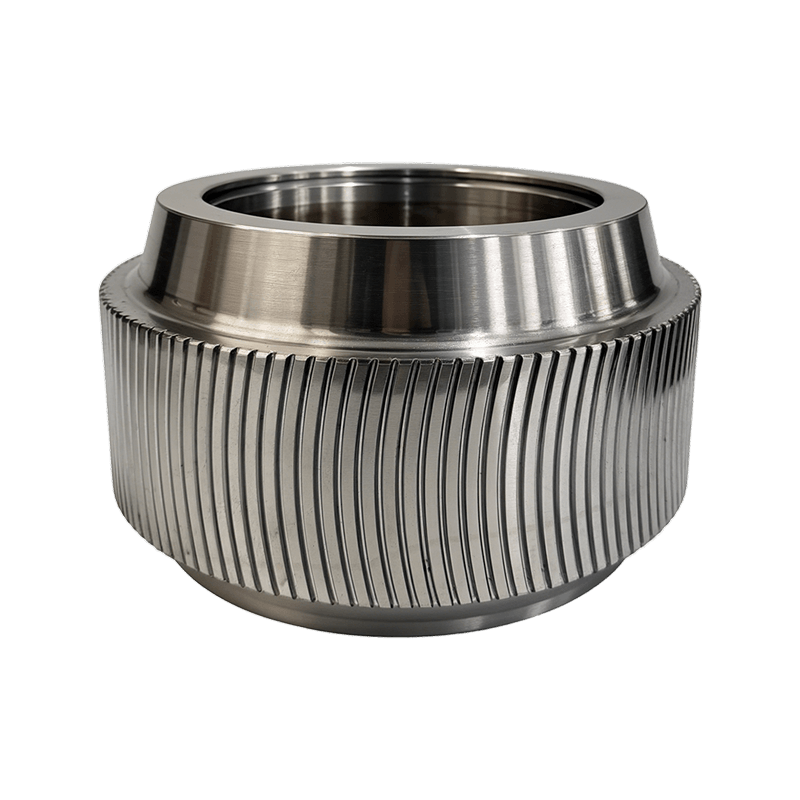
| Curved-tooth shell | Profile rather than material | Low bulk density feeds, poor bite | Improves material intake and reduces slip |
The most common specification error is ordering a shell that is harder than the die. A harder shell shifts wear to the die face, and the ring die costs two to three times more than the shell.
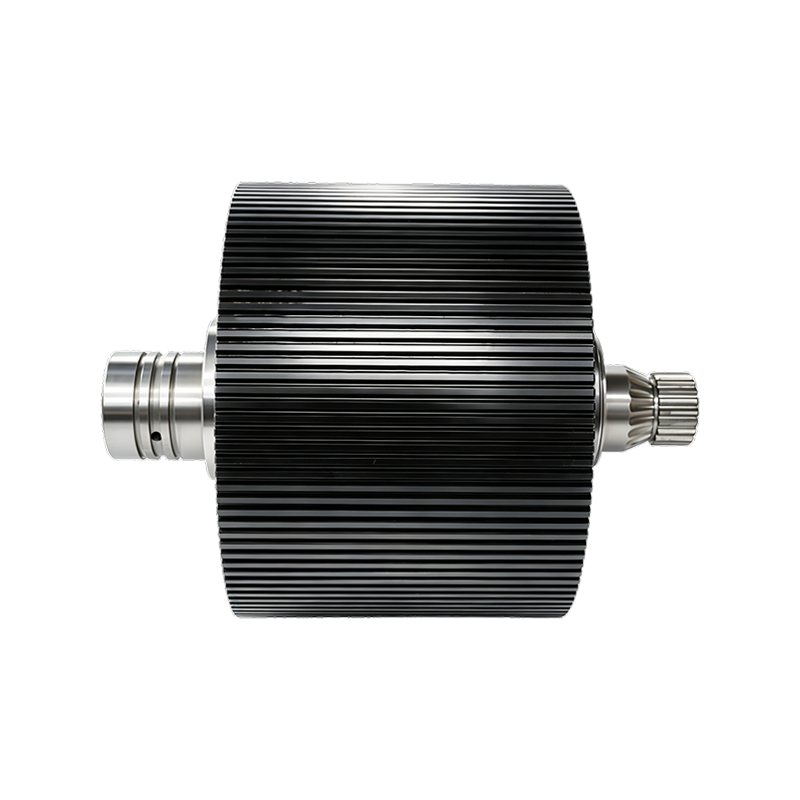
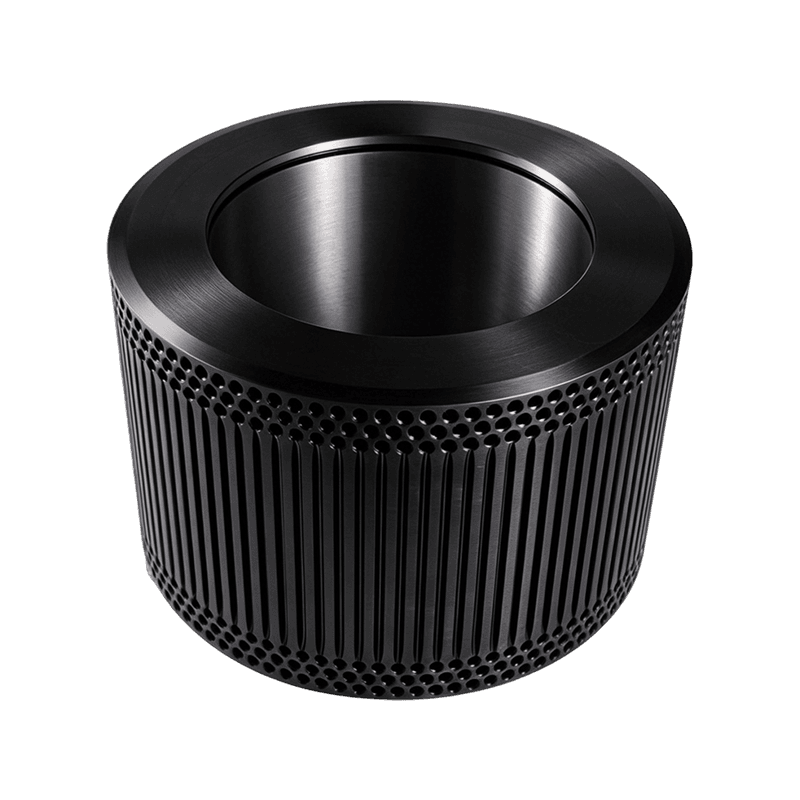
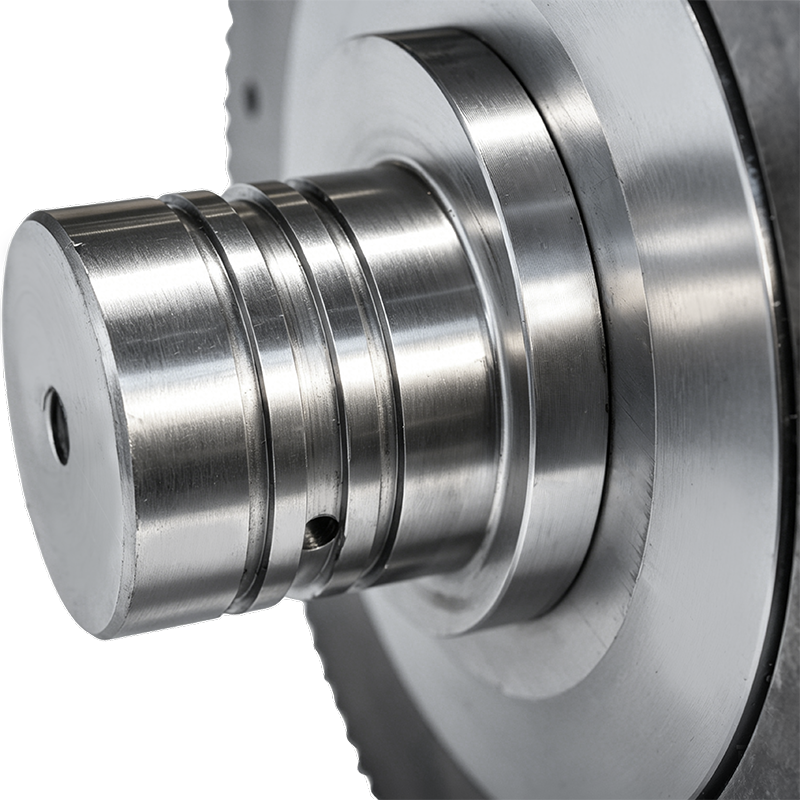 Complete Ring Die Roller Shell Assembly for Pellet MillsThis assembly includes the shell, bearings, shaft, and seals as a single exchange unit, helping avoid premature wear when hidden bearing or mounting issues are suspected during maintenance.View Product →
Roller Shell Only or Complete Pressure Roller Assembly?
Choose a single shell when the bearing and mounting hardware are sound; choose a complete pressure roller assembly when you cannot verify the condition of those hidden parts. On a planned maintenance schedule, shells are often changed twice before a set of bearings reaches its service limit. In that situation, only the shell has to be replaced. Once you measure bearing play, hear a growling sound, or find contamination on the oil slinger, the decision changes.
Installing a new shell on a damaged bearing produces a polished, shifting contact pattern that destroys the new part quickly. The complete pressure roller assembly removes that risk by replacing the shell, shaft support, seals, and matched mounting hardware together. Jindingsheng designs the assembly as a single exchange unit so the roller shell arrives with the correct pre-set geometry for the press model.
- Bearing grease is clean and play is within limit
- Mounting pins and shaft journals show no scoring
- Production schedule allows extra teardown time
- Bearing noise or axial play is already detectable
- Seals, end covers, or oil slingers show wear marks
- Downtime is tight and pre-set clearance has value
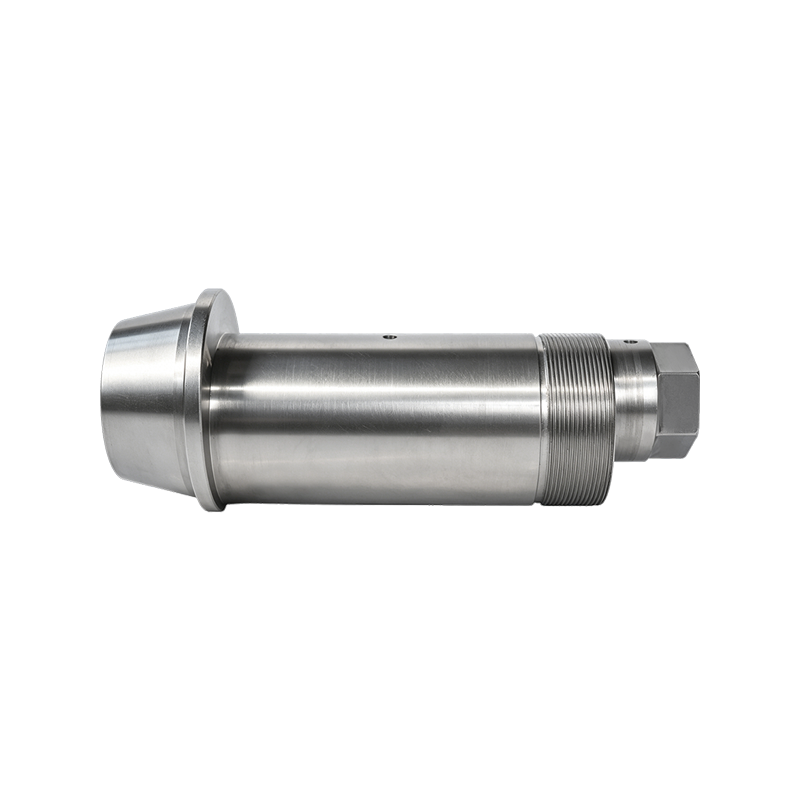 42CrMo Eccentric Shaft for Pellet Press MachineryA precision-forged and heat-treated eccentric shaft that converts rotary motion into the oscillation needed for material flow, essential for maintaining proper roller shell performance.View Product →
Eccentric Shafts and Internal Components Carry the Wear Chain Forward
A worn eccentric shaft or a mis-sized spacer can make a brand-new shell fail faster than a full season of normal production. Eccentric shafts, bearing gland end covers, oil slingers, and precision spacers are often treated as cheap accessories, but each one has a specific mechanical job. The shaft converts rotary motion into the oscillation that drives material through the die. The oil slinger directs lubrication into the bearing, and the spacer establishes the exact lateral position of the roller shell.
A 0.05 mm deviation in shaft journal wear is enough to change bearing load distribution, and that shows up as uneven shell wear across the die face. Jindingsheng offers eccentric shafts in 45 steel, 40Cr, and 42CrMo so the replacement can match the original load assumption rather than default to the cheapest option.
- Remove the roller shell and measure the remaining wall thickness.
- Rotate the eccentric shaft by hand and feel for irregular drag.
- Inspect the bearing gland end cover and oil slinger for contact marks.
- Compare shaft journal dimensions with the new-part specification.
- Set the shell-to-die radial gap after assembly, not before.
A clean grease sample is not proof of a healthy bearing. The roller shell wear pattern tells the story first.
Schedule Replacement Work on Gap Measurements, Not on a Calendar
The most reliable trigger for replacement is the measured increase in die-to-roller gap and the loss of shell wall thickness, not an hour counter. Calendars are useful as reminders, but production load and raw material abrasion vary too much to make them the only control. For a medium-sized ring-die press running two shifts, check the roller-to-die gap every 200 operating hours.
Replace a roller shell when the outer diameter has worn by 2.5 to 3.0 mm from the new dimension, or sooner if the profile loses its bite. This schedule gives predictable outcomes without changing dies too early. For presses running continuous high-tonnage shifts, heavy-duty roller assemblies deserve attention because their larger support surfaces spread the same load over a bigger contact area.
| Symptom | Probable cause | Part to inspect or replace |
| Thin pellets and die face glazing | Roller-to-die gap too wide | Roller shell, eccentric shaft wear |
| Shell polished but not biting | Wrong tooth profile for the feed | Curved-tooth roller shell |
| Bearing overheating | Seized or dry oil slinger | Oil slinger, bearing gland end cover |
| Metallic knock on a loaded press | Excessive bearing play or bent shaft | Pressure roller assembly, eccentric shaft |
| Uneven wear across shell width | Worn spacer ring or misaligned shaft | Precision spacer, eccentric shaft |
Track the diameter, not just the hours. A shell that loses 0.1 mm in 200 hours is wearing normally. A shell that loses 0.4 mm in the same period points to a contaminated bearing or a gap set too tight.
Sourcing Pellet Mill Replacement Parts Without Losing Metallurgical Control
The commercial risk in replacement parts is not the unit price; it is uncontrolled metallurgical and dimensional variation between batches. Pellet mill replacement parts are manufactured in batches, and each batch depends on raw material, heat treatment, and machining tolerances. A quotation that looks cheap is only cheap if the hardness report and dimensional certificate match the agreed grade.
- Ask for the material grade and heat number on every invoice.
- Request a hardness report for roller shells and shafts, not just a chemical certificate.
- Confirm whether tolerances are held on the new-part dimension or the worn limit.
- State the packing and moisture protection requirement for sea freight.
- Check the spare parts catalogue for the press model and die outer diameter.
Order with the same documentation you would expect from an OEM: material grade, hardness range, dimensional report, and batch traceability. A supplier that cannot provide heat-treatment records cannot guarantee wear life.
Pellet Mill Replacement Parts: Common Sourcing Questions from Maintenance Teams
How often should roller shells be replaced in a feed pellet mill?
In abrasive feed applications, most plants replace a roller shell every 800 to 1,200 operating hours. In low-abrasion feed applications, intervals can extend beyond 2,000 hours. Use the 200-hour gap check as the primary trigger and change the shell when its outer diameter has lost 2.5 to 3.0 mm.
Should I replace the complete pressure roller assembly or only the roller shell?
Replace only the shell when the bearing, shaft journals, and end covers are within tolerance. Replace the complete assembly when you can measure bearing play, hear noise, or see scoring on the oil slinger. The extra upfront cost is lower than the cost of a second teardown.
Why does a new roller shell sometimes fail before the old die is worn out?
A new shell can fail early if the radial gap is set too tight, if the shell material is too hard for the die face, or if the eccentric shaft and bearings are transferring vibration into the shell. Check the gap after every assembly and compare shell hardness with die hardness before ordering.
What information should I send before ordering replacement parts?
Send the press brand and model, die outer diameter, roller shell width, mounting pin centers, shaft journal dimensions, and the current shell material. If possible, add photos of the worn part and the bearing housing. That reduces the chance of a mismatch caused by older machines redesigned across production years.

Get In Touch
Follow us
Quick Links
Contact Us
Email : ysf@jindingsheng.com.cn
Address : No. 19, Qiucun Town Industrial Concentration Zone, Guangde City, Xuancheng City, Anhui Province
