

 English
  中文简体
中文简体  русский
  Español
  عربى
عربى 

Industry News
100Cr6 Bearing Steel Pellet Roller Shell Buying Guide: Hardness, Wear, Fit
Content
- 1 What Decides the Service Life of a Pellet Roller Shell
- 2 What 100Cr6 Bearing Steel Is and How It Is Processed
- 3 The Four Ways a Roller Shell Dies
- 4 Tooth Profile: Pairing the Shell Surface with Your Material
- 5 Selection: Fit, Hardness Matching, and Supplier Control
- 6 Maintenance: Getting the Most Tons Out of a 100Cr6 Shell
- 7 Conclusion: Specify 100Cr6, Then Verify the Details
What Decides the Service Life of a Pellet Roller Shell
Most pellet mill roller shells are replaced not because they broke, but because they wore out — and by the time the wear becomes visible, the ring die is often scored as well. That sequence is why the shell material is the single most important specification a buyer controls. 100Cr6 bearing steel, equivalent to GCr15 in the Chinese standard system, is the benchmark for abrasive feed and biomass service. It provides the highest surface hardness and contact-fatigue resistance among the steels normally used for roller shells. In production terms, that means more tons per shell, fewer unplanned stops, and less risk of a worn shell damaging the die before anyone notices.
This guide explains what 100Cr6 is, how a shell in this grade is processed, the four main failure modes it resists, which tooth profile to pair with it, how to match it to a ring die, and what a practical maintenance routine looks like.
What 100Cr6 Bearing Steel Is and How It Is Processed
Composition and heat treatment
100Cr6 is the European designation for a high-carbon chromium bearing steel; the same grade is produced in China as GCr15. Its nominal composition is approximately 0.95–1.05% carbon, 1.30–1.65% chromium, 0.25–0.45% manganese, and 0.15–0.35% silicon. Chromium is the decisive element because it forms the fine, hard carbides that give the steel its resistance to abrasion and rolling contact fatigue.
A roller shell in this grade follows a defined process route: forging to refine the ingot structure, spheroidizing annealing to make the steel machinable, turning and tooth cutting, then through-hardening and tempering. A correctly processed shell reaches approximately 58–62 HRC. That hardness level is what separates a bearing-steel shell from a structural-steel shell in daily service.
How 100Cr6 compares with other roller shell materials
The market offers four common shell materials, and each balances hardness, toughness, and cost differently. The table below summarizes the practical tradeoffs.
| Material | Typical hardness | Wear resistance | Toughness | Best suited for |
|---|---|---|---|---|
| 40Cr alloy steel | 28–42 HRC (quenched and tempered) | Moderate | Good | Light to medium duty, cost-sensitive replacement |
| 20CrMnTi alloy steel | Carburized case 58–62 HRC, softer core | Good on the case | Excellent | Impact-heavy service and shock loading |
| 60Si2Mn spring steel | 45–52 HRC | Medium-high | Very good | High-impact conditions and elastic recovery |
| 100Cr6 / GCr15 bearing steel | 58–62 HRC | Highest | Moderate | Abrasive feed, biomass, high-volume production |
Read the table as a tradeoff. 100Cr6 wins on wear and fatigue resistance, which are the failure modes that dominate normal pelleting. If a mill regularly ingests tramp metal or runs very coarse material, the extra toughness of 20CrMnTi or 60Si2Mn can justify their shorter wear life. For typical feed and biomass lines, a bearing steel GCr15/100Cr6 pellet roller shell produced with controlled raw material and heat treatment is the strongest starting point.
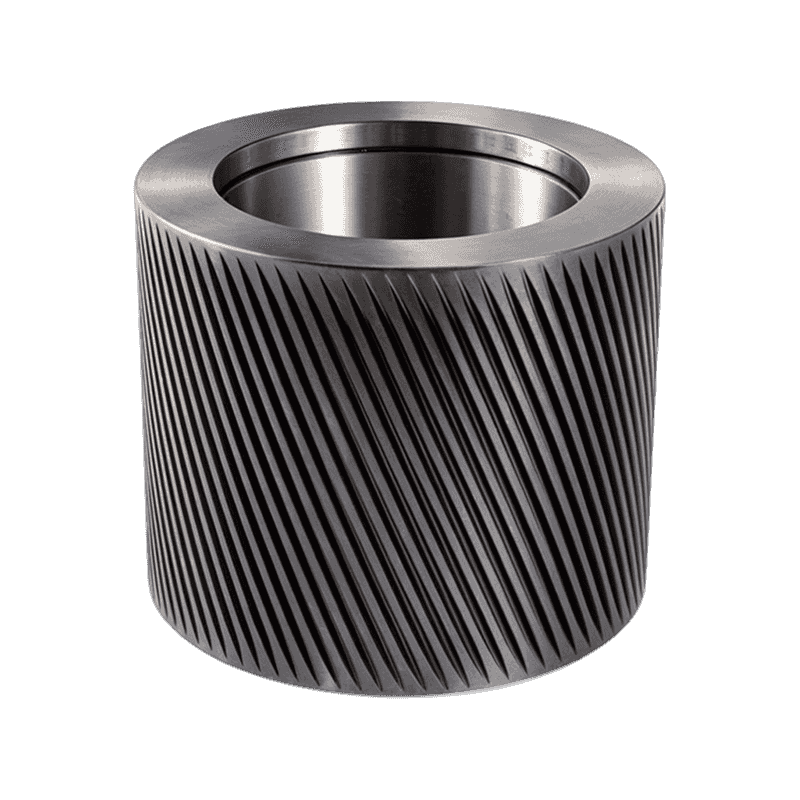 Custom Bearing Steel GCr15/100Cr6 Pellet Roller Shell Supplier, CompanyAnhui Jindingsheng Machinery Co., Ltd is China Custom Bearing Steel GCr15/100Cr6 Pellet Roller Shell Supplier and Company. Product Overvi...View Product →
The Four Ways a Roller Shell Dies
Roller shells fail in four recognizable ways. Identifying the one you are fighting makes the material decision much easier.
- Abrasive wear — Grit, sand, and mineral fines act like sandpaper; the tooth profile flattens gradually and output declines.
- Contact fatigue spalling — Cyclic pressure between shell and die initiates subsurface micro-cracks that grow until flakes break out of the surface.
- Plastic deformation — A piece of tramp metal, an over-tightened roller gap, or a stalled mill presses the surface beyond its yield strength.
- Brittle fracture — A sharp impact, or a shell fitted out of tolerance, concentrates stress until the shell cracks.
100Cr6 is engineered for the first two. The grade was originally developed for rolling-element bearings, which experience the same repetitive contact stress that a roller shell sees against the die. High hardness resists abrasion, and a clean, uniform carbide structure delays spalling. The steel is less forgiving of impact than the tougher structural grades, which is why keeping foreign objects out of the mill matters more when you run bearing steel.
Tooth Profile: Pairing the Shell Surface with Your Material
Smooth, dimpled, or corrugated
The shell surface has to grip the material, spread the load, and push material into the die holes. The standard patterns cover different jobs.
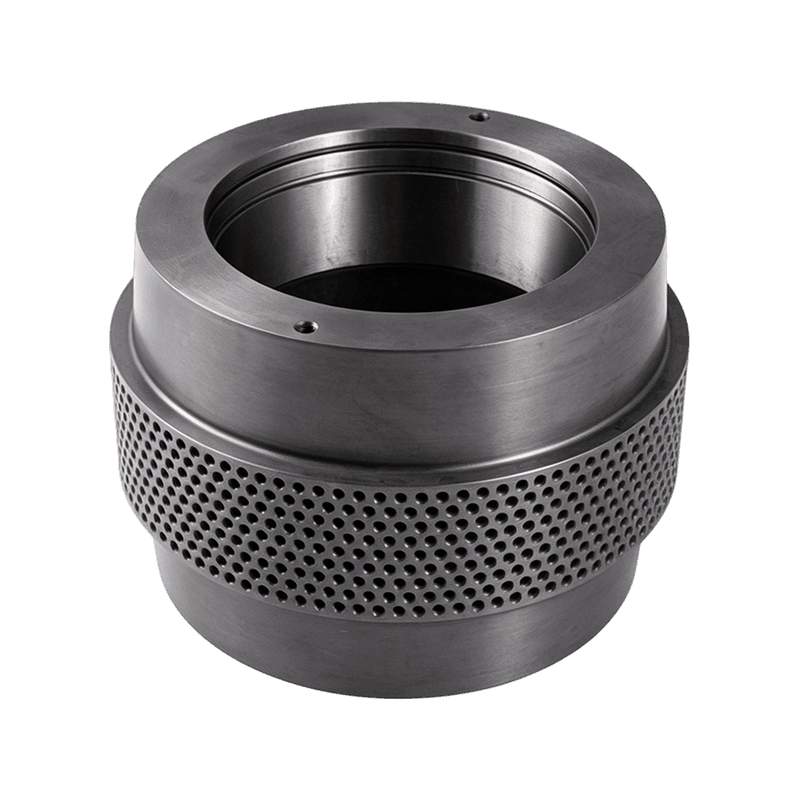
- Smooth — adequate for powdery, free-flowing formulas that compress easily; prone to slip with oily or fibrous material.
- Dimpled — small indentations improve bite and help hold slippery mixes on the roll face.
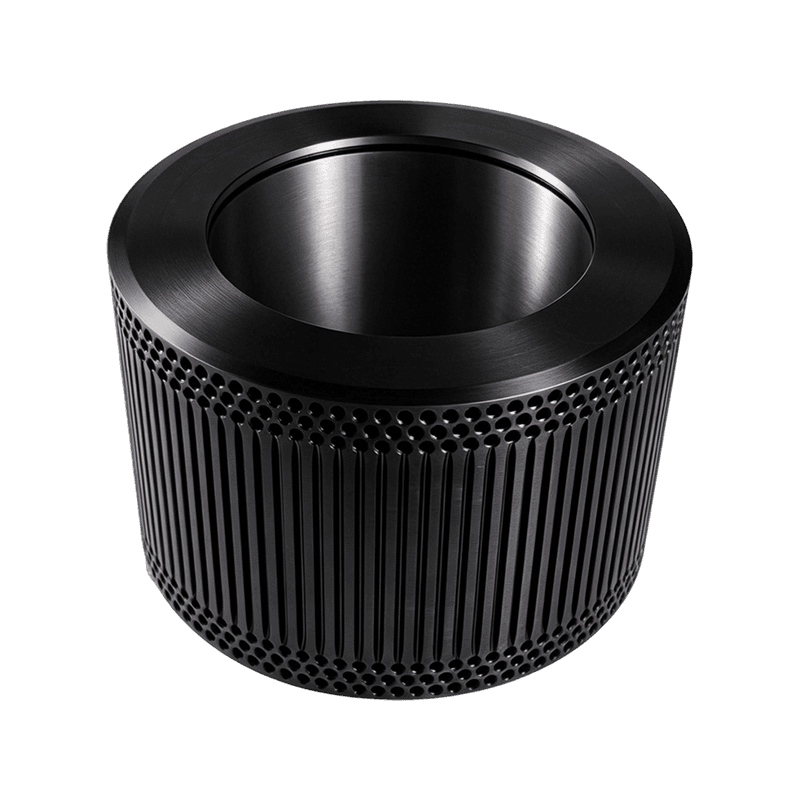
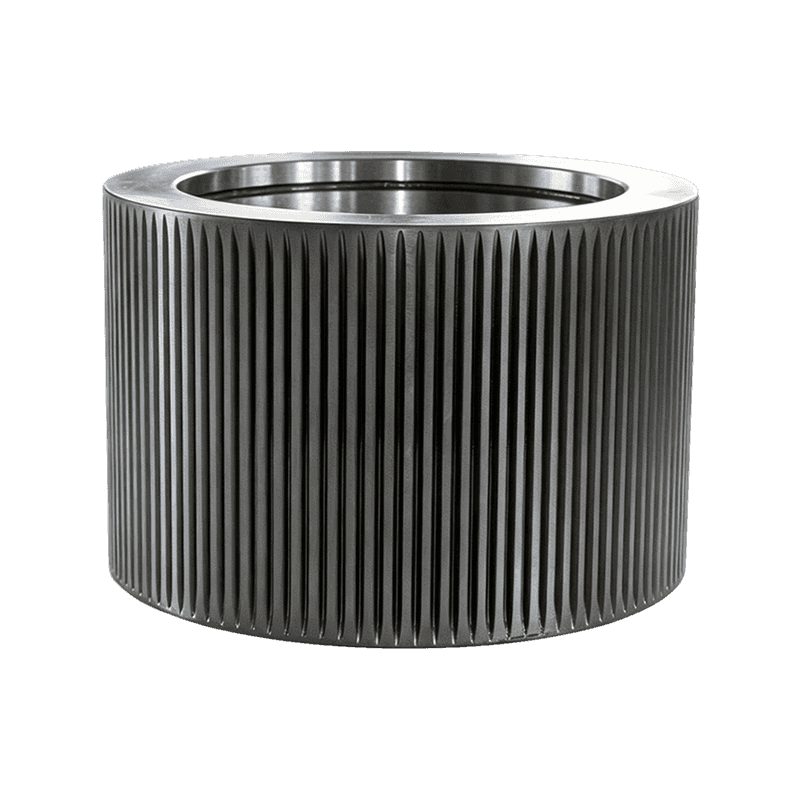
- Straight corrugated — aggressive grooves give a strong grip on fibrous and coarse material.
- Curved corrugated — angled teeth improve self-feeding and smooth out torque peaks.
Why curved teeth and bearing steel work well together
For biomass, high-fiber feed, and large-diameter mills, curved-tooth roller shells are often preferred because the angled grooves pull material into the nip continuously rather than letting the roll slide over it. Combined with a 58–62 HRC bearing steel shell, those teeth stay sharp far longer than teeth cut into a softer alloy. If premature tooth blunting is cutting into your output, a curved-tooth design deserves a look against your current die size and feed formula.
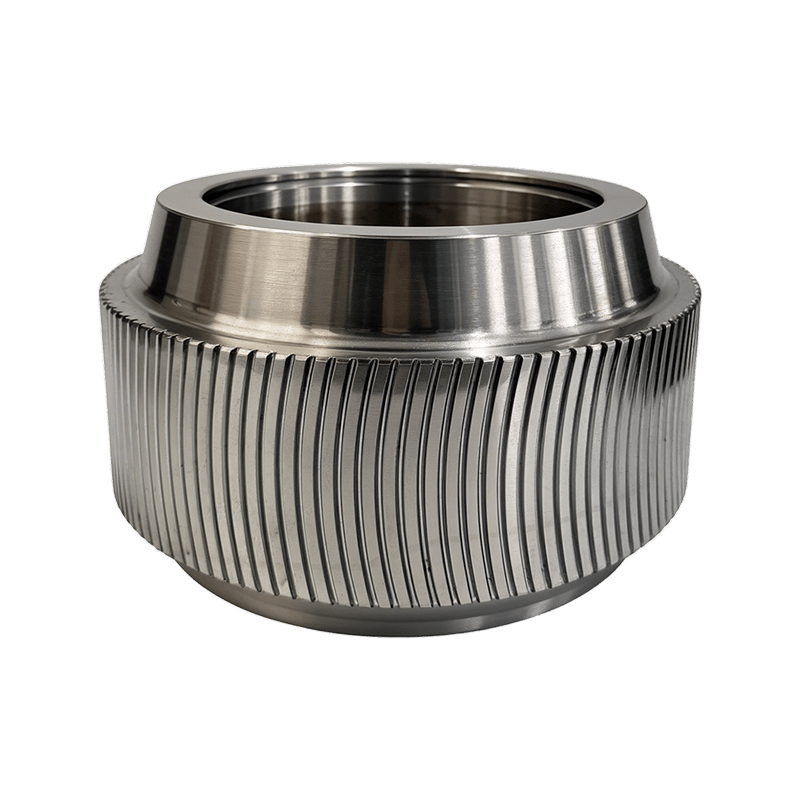 Custom Curved Tooth Roller Shell for Pellet Mill Supplier, CompanyAnhui Jindingsheng Machinery Co., Ltd is China Custom Curved Tooth Roller Shell for Pellet Mill Supplier and Company. Product Overview Th...View Product →
Selection: Fit, Hardness Matching, and Supplier Control
Roller-to-die fit
The roller shell and the ring die wear as a pair. The shell outside diameter must match the die inside diameter and the designed operating gap. When you replace one roller of two or three on the same die, the new shell must match the diameter of the remaining shells so all rollers share the load evenly. The bore and keyway also deserve checking: a shell that sits loosely on the hub will fret, overheat, and eventually crack around the keyway.
Shell hardness versus die hardness
Hardness matching cuts both ways. A shell significantly harder than the die will accelerate die wear and shorten the life of the more expensive component. A shell much softer than the die will wear quickly and alter the die's working profile. For most feed and biomass mills, the practical choice is a shell hardness close to, or slightly below, the die hardness, with the roller gap managed as part of daily operation.
Supplier process control
Two shells made from the same grade of steel can perform very differently depending on how they are made. Before ordering, confirm that the supplier can control four things:
- Raw material traceability — a mill certificate for the 100Cr6/GCr15 grade.
- Forging quality — an internal structure free of cracks and segregation.
- Heat treatment — consistent hardness across the shell, confirmed by testing.
- Machining tolerance — bore concentricity, tooth geometry, and surface finish within specification.
Those four points often separate a shell that runs 2,000 hours from one that runs 6,000 hours on the same line, which is why experienced buyers look for a manufacturer that controls the entire process. For operations that want to eliminate guesswork about matching, some suppliers offer a high-productivity ring-die-and-roller-shell set that keeps the two wearing parts aligned from the start.
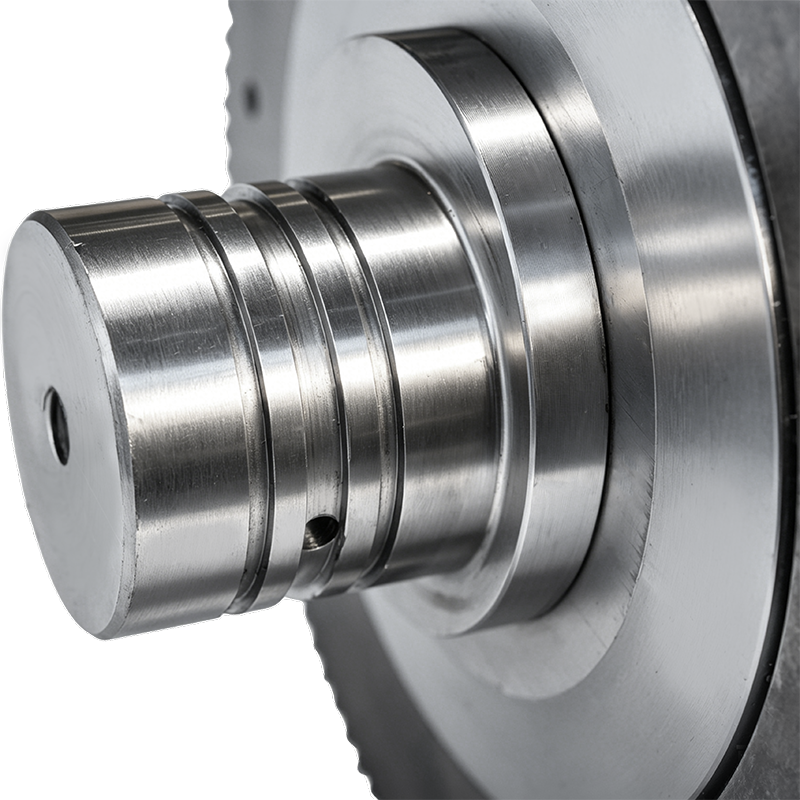 Custom High Productivity Pellet Mill Spare Parts Ring Die Roller Shell Assembly Anhui Jindingsheng Machinery Co., Ltd is China Custom High Productivity Pellet Mill Spare Parts Ring Die Roller Shell Assembly Supplier a...View Product →
Maintenance: Getting the Most Tons Out of a 100Cr6 Shell
The best shell still needs management. A simple routine catches problems before they reach the die.
- Record the starting dimensions of every new shell, including outside diameter and tooth height.
- Inspect at regular intervals, weekly or after a fixed tonnage, for spalling, hairline cracks, and uneven wear across the face.
- Replace the shell before the tooth profile degrades to the point where the roller gap can no longer be maintained.
- Keep the roller gap within the die manufacturer's recommendation; too tight raises heat and load, too loose causes slip and lower output.
- Use the shell change as an opportunity to check the bearings, seals, and oil slingers while the roller is open.
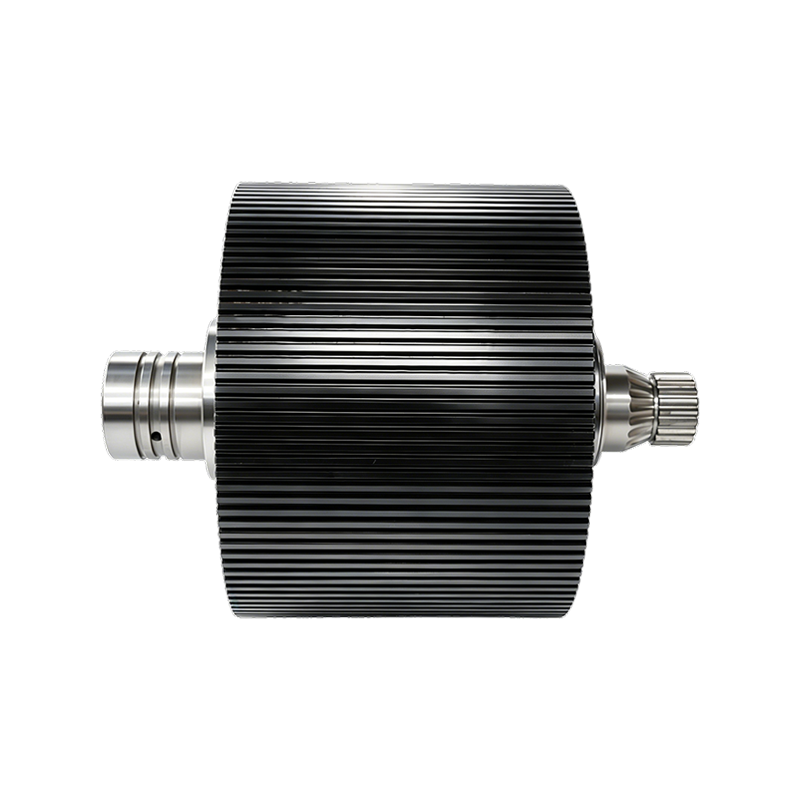
If you want the full picture of how the roller assembly wears and what to inspect before buying a replacement, our guide to pressure roller assembly wear and replacement covers the construction details and the typical failure points. Material behavior also depends on line design and feed formula, so following industry news on roller shell and die maintenance helps when you evaluate a new supplier or a new recipe.
Conclusion: Specify 100Cr6, Then Verify the Details
100Cr6 bearing steel is the right baseline for most pellet roller shells in abrasive feed, biomass, and high-volume production. Its hardness and fatigue resistance translate into longer replacement intervals and lower cost per ton. But the material alone does not guarantee performance. The tooth profile must suit the material, the shell must match the die in diameter and hardness, and the manufacturer must genuinely control the forging, heat treatment, and machining process.
A supplier that offers the complete range of pellet roller shells and mill components makes it easier to keep those details consistent across every replacement. If wear life is your main complaint, specify 100Cr6, verify the process, and track the results on your own line.


Get In Touch
Follow us
Quick Links
Contact Us
Email : ysf@jindingsheng.com.cn
Address : No. 19, Qiucun Town Industrial Concentration Zone, Guangde City, Xuancheng City, Anhui Province
